
.jpg)
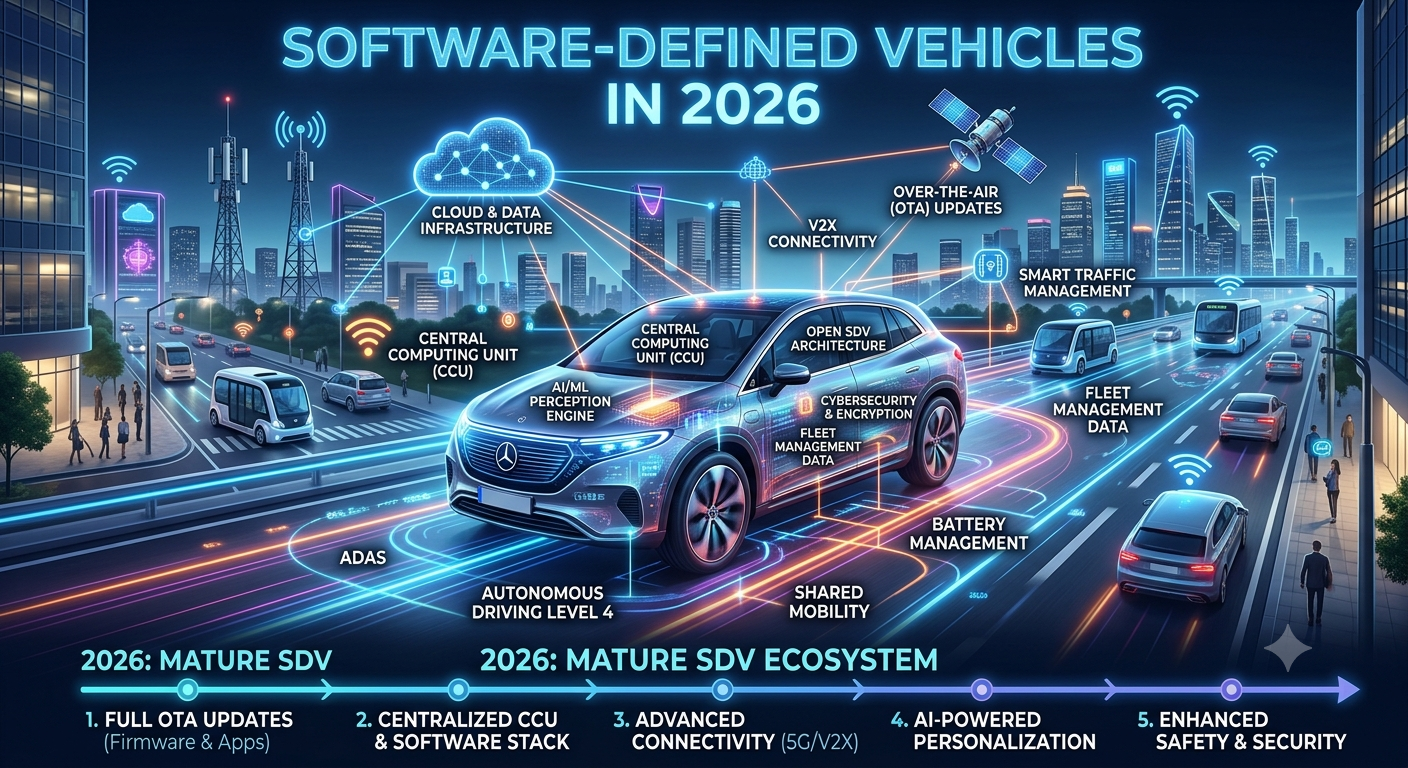
Software-Defined Vehicles in 2026: How Automotive Technology Is Changing the Future of Driving
The automotive industry is rapidly moving beyond traditional mechanical engineering. Modern vehicles are becoming intelligent, connected and increasingly controlled by software. This transformation is known as the Software-Defined Vehicle (SDV). Unlike conventional vehicles, where many functions depend on separate electronic control units, software-defined vehicles use more centralized computing and software to control and improve different vehicle functions. This allows manufacturers to introduce new features and improvements even after the vehicle has been delivered to the customer.
What Is a Software-Defined Vehicle?
A Software-Defined Vehicle is a vehicle where software plays a major role in controlling and improving vehicle functions.
Modern software can manage areas such as:Vehicle performance
Infotainment
Driver assistance
Battery management
Vehicle connectivity
Digital dashboards
How Over-the-Air Updates Are Changing Vehicles
One of the biggest advantages of software-defined vehicles is Over-the-Air (OTA) updates. Similar to how smartphones receive software updates, connected vehicles can receive updates without requiring every improvement to be installed manually at a workshop.
OTA updates can potentially be used for:
Software improvements
Security updates
Infotainment enhancements
Driver-assistance improvements
Battery-management improvements
Conclusion
Software-defined vehicles represent one of the major changes taking place in the automotive industry. From OTA updates and intelligent diagnostics to connected services and AI-powered features, software is becoming an increasingly important part of modern mobility.
As automotive technology continues to evolve, businesses and vehicle owners alike will need to understand these new systems to make the most of the next generation of vehicles.